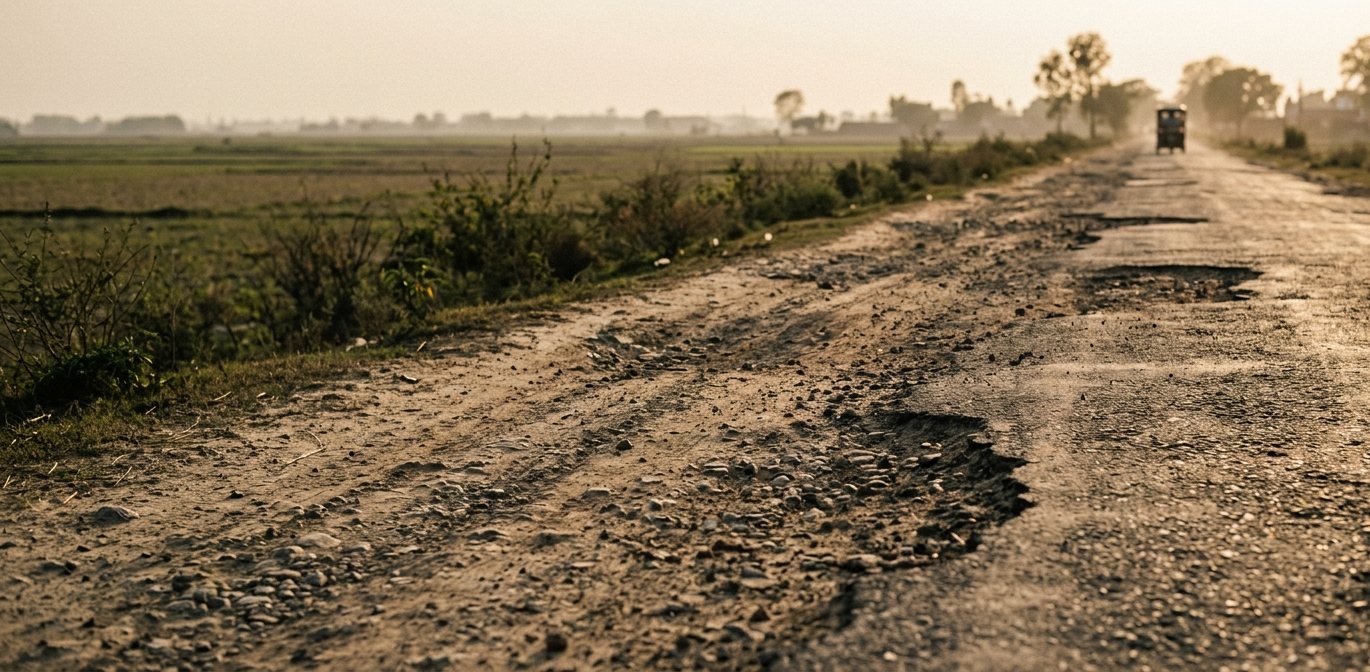
The roads, as they actually are
पथिक — the traveller who remembers the road. Pathik builds a living digital twin of rural roads out of the journeys our fleet is already making, and revises it on every pass.
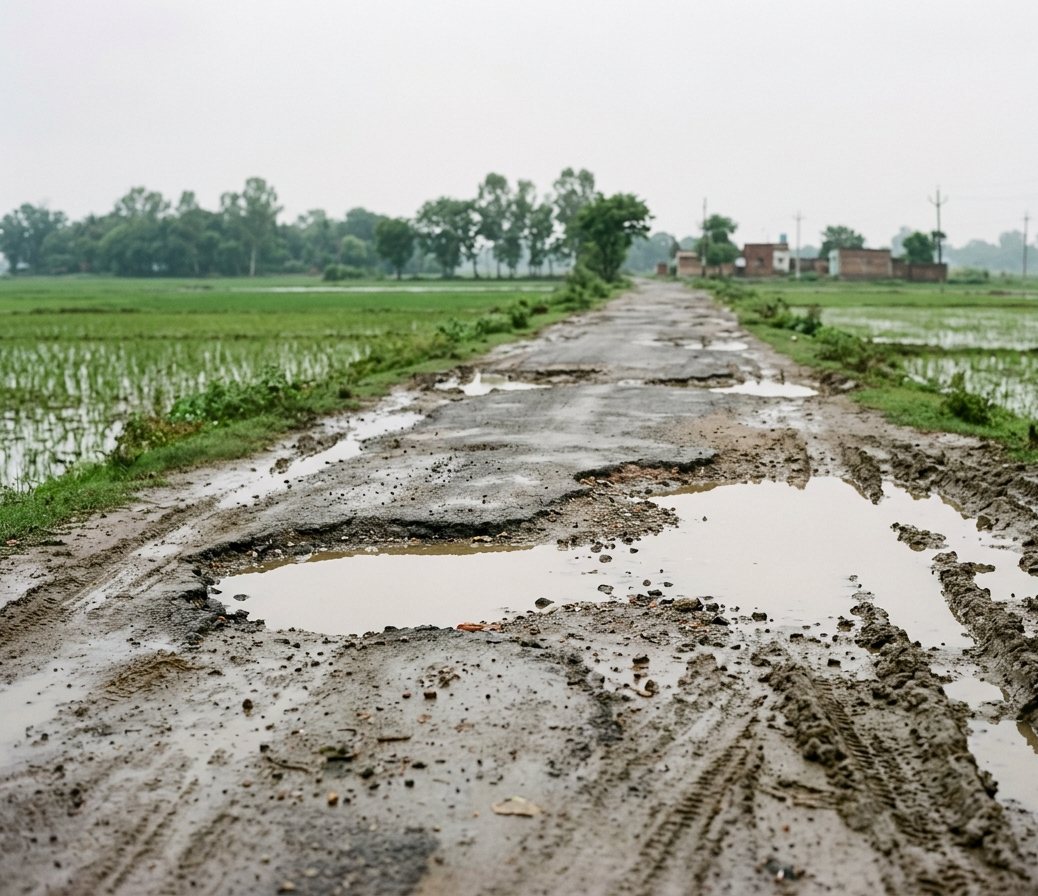
Nobody surveys a village road
Road condition data in rural India is gathered rarely, by a vehicle sent out to do only that, at a cost that means it happens once and then ages. By the time a survey is filed, a monsoon has rewritten it. So the roads that most need knowing about are the ones least known — and every range estimate, every delivery promise and every repair budget rests on a guess.
- ✓Surveys are expensive, so they are rare
- ✓A monsoon can undo one in a week
- ✓The last mile is surveyed least of all
The fleet is the survey
Our e-rickshaws are already on these roads, all day, carrying shopping and passengers and vegetables. Each one already measures its own vibration, current draw, speed and position, because it needs all four to manage a battery. Pathik is what happens when you keep those readings instead of discarding them.
Drive
A driver makes an ordinary trip. Nothing is asked of them and nothing changes about their day.
Measure
The pack's own sensors record the journey — the jolts, the watt-hours, the speed held, the slope climbed.
Revise
Each forty-metre cell of road updates its estimate. Agreement raises confidence; disagreement lowers it.
Six signals from an ordinary journey
None of these is collected for its own sake. Every one of them is already measured to run the battery well; Pathik is the second use.
Vibration signature
RMS and peak acceleration with the crest factor between them — the shape of the jolt, not just its size. A pothole, a speed bump and a washboard stretch feel different to an accelerometer.
Energy drawn
How much the pack actually spent crossing the segment. A rough road is not an opinion; it is a measurable number of watt-hours per kilometre.
Speed held
Where drivers slow and stay slow. A sustained crawl on a clear road is one of the strongest signals of a kaccha surface.
Incline
Sustained pitch angle, separated from the noise of the surface — so a climb is not mistaken for damage.
Position
Each reading lands in a geohash-8 cell, roughly forty metres of road, which is the unit the whole twin is built from.
Who and how often
Passes and distinct vehicles are counted separately. Ten trips by one rickshaw is a hint; ten vehicles agreeing is evidence.
A survey ages. This one heals.
Most road datasets are photographs: true on the day, quietly wrong a season later, and with nothing in them that knows the difference. Pathik keeps being told otherwise.
When a vehicle crosses a cell where damage was recorded and finds it smooth, that is not discarded as noise — it is counted as a contradiction. Enough contradictions and the probability falls, and the segment is marked repaired. A road that gets fixed stops being a bad road in the data, without anybody filing anything.
The same applies in reverse. A new pothole does not wait for the next survey; it arrives as a disagreement between what was believed and what the last vehicle felt.
A number per segment, and what reads it
RECI, 0.87 to 1.75
A single road energy coefficient per segment. Smooth tarmac costs 0.87; a kaccha track costs 1.75 — the same journey, twice the energy, and now a number rather than a complaint.
Defect probabilities
Pothole, speed bump, washboard and rutting each carry their own Bayesian probability, updated pass by pass instead of being declared once.
A surface class
Smooth, deteriorated, pothole zone, unpaved or kaccha — with the counts behind the verdict kept, so a close call is visibly a close call.
Confidence
Every figure carries how sure it is. A segment crossed twice does not speak with the authority of one crossed four hundred times.
Routing weight
The fleet's own router weights each road by its energy cost rather than its distance, so the cheapest path is chosen, not the shortest.
Honest range
Range prediction reads the roads actually ahead. This is why a DeepValley estimate holds up on a village road, where a figure from a datasheet does not.
Already running in Nalanda
Built entirely from journeys the fleet was making anyway. No survey vehicle, no dedicated instrumentation, no separate cost per kilometre.
Useful well beyond our own fleet
Panchayats and PWD
Which stretch is worst, how bad, and whether last year's repair held — as a ranked list rather than a complaint register.
Fleets and logistics
Route by energy rather than distance, and price a rural delivery from what the road will actually cost to cross.
Anyone estimating range
The gap between a datasheet figure and a village road is exactly what this measures. It is why our own range estimates hold.
Build your exact pack
Chemistry, voltage, BMS, enclosure, monitoring — each explained, with a live price and an instant WhatsApp quote.
Open the pack builder →Start with ₹0 down
Battery-as-a-Service: your old battery’s scrap value covers the deposit. ₹117/day flat, ~200 km, unlimited free recharge.
How BaaS works →